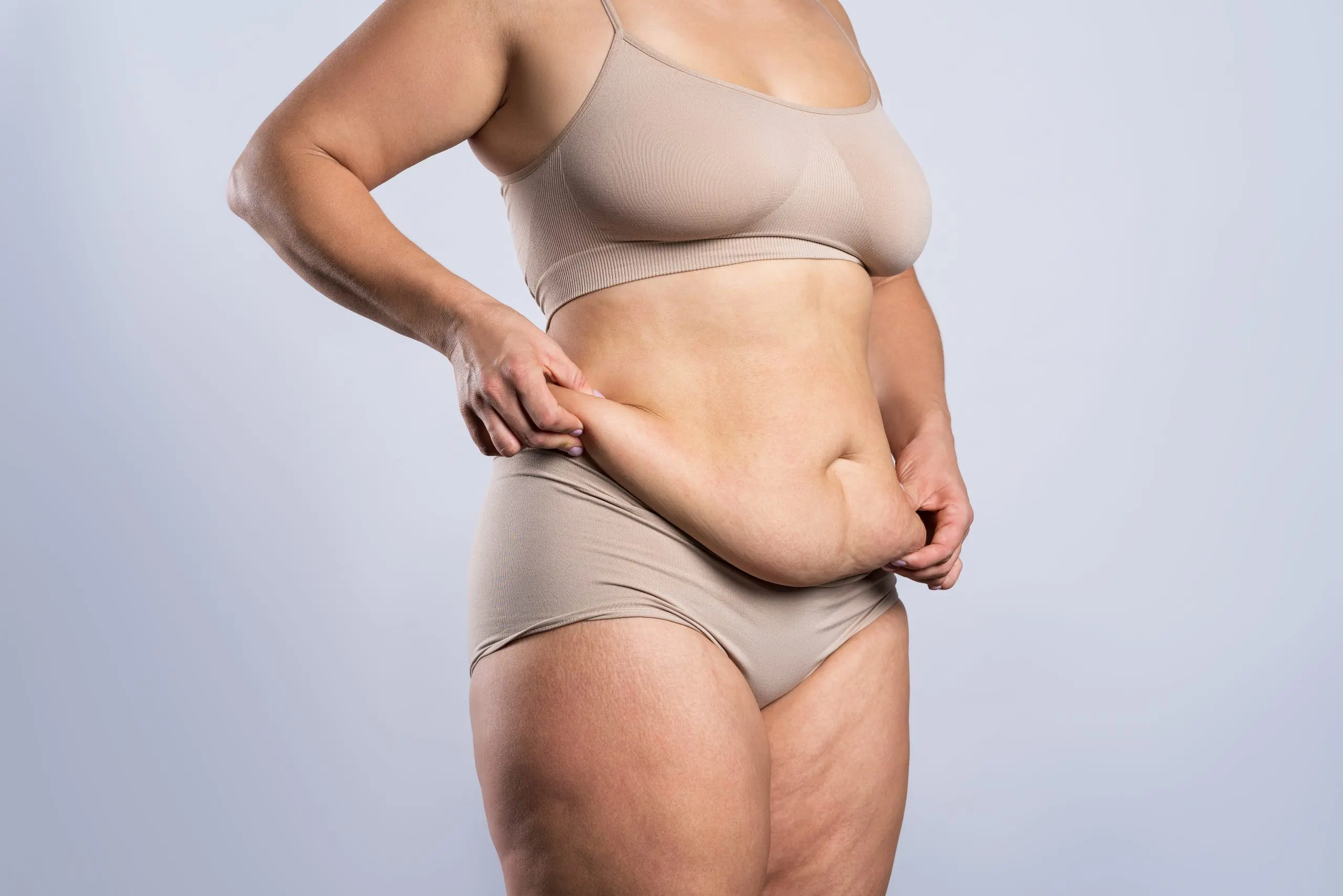
For many people, the most frustrating part of body transformation is not losing weight overall—it is dealing with one specific area that refuses to change. Even after months of disciplined eating and consistent workouts, the lower abdomen often remains soft, less defined, or disproportionate compared to the rest of the body.
This is where the idea of stubborn belly fat becomes very relevant. It is not a reflection of poor effort or lack of discipline. In fact, many individuals who struggle with this issue are already living active, health-conscious lifestyles. The challenge lies in how the human body stores and releases fat, especially in the abdominal region.
According to Dr. Mohan Rangaswamy, abdominal fat is one of the most resistant fat deposits in the body due to a combination of genetic programming, hormonal influence, and structural fat layering. Understanding this is the first step toward realistic expectations and effective solutions.
This article explores why belly fat is so difficult to reduce, why exercise alone often reaches a plateau, and how modern body contouring approaches such as VASER-assisted liposuction are used to refine abdominal shape when lifestyle changes are no longer enough.
The human body does not distribute fat evenly. From an evolutionary perspective, the abdominal region plays a protective and energy-storage role. This is why the body tends to prioritize fat storage in this area during periods of calorie surplus and holds onto it more tightly during fat loss phases.
Dr. Mohan Rangaswamy explains that abdominal fat is often one of the last areas to respond to weight reduction efforts. Even when overall body fat decreases, the body may continue to preserve fat in this region as a biological safeguard.
This natural mechanism is one of the primary reasons why belly fat feels disproportionately stubborn compared to other areas like the face, arms, or upper body.
One of the most common misconceptions in fitness is the idea that abdominal exercises directly burn belly fat. While core exercises strengthen the underlying muscles, they do not selectively remove fat from the abdominal area.
Fat loss occurs systemically, meaning the body decides where to reduce fat based on genetic and hormonal factors rather than workout targeting.
According to Dr. Mohan Rangaswamy, many individuals notice improved strength and posture after consistent exercise, but still struggle with abdominal fullness. This happens because muscle conditioning and fat reduction are two separate biological processes. The result is a stronger core underneath a layer of fat that remains resistant to change.
Hormones play a significant role in determining how and where fat is stored in the body. The abdominal region is particularly sensitive to hormonal fluctuations.
Cortisol, often associated with stress, is one of the key hormones linked to increased abdominal fat retention. When cortisol levels remain elevated for long periods, the body may prioritize fat storage around the midsection.
Insulin also influences how efficiently the body processes and stores energy. Irregular metabolic patterns can make abdominal fat more persistent even in individuals who maintain a healthy lifestyle.
Dr. Mohan Rangaswamy emphasizes that hormonal balance is often an overlooked factor in patients who feel they are doing everything “correctly” but still do not see abdominal improvement.
Genetics plays a defining role in body shape. It determines not only how much fat the body stores, but also where it is stored first and lost last.
Some individuals naturally carry more fat in the abdominal area, while others may store fat in the thighs, hips, or upper body. These patterns are deeply ingrained and do not change easily through lifestyle modification alone.
Dr. Mohan Rangaswamy explains that this genetic blueprint is why two individuals following identical diets and exercise routines can have completely different abdominal outcomes. For some, the abdomen becomes lean early. For others, it remains the final resistant area even after significant weight loss.
The abdominal region contains multiple layers of fat, including both superficial and deeper deposits. These layers behave differently during weight loss.
Superficial fat is generally more responsive to diet and exercise. However, deeper fat layers tend to be more resistant and less visible to metabolic breakdown processes. This layered structure is one of the reasons abdominal fat is difficult to eliminate completely through lifestyle changes alone.
According to Dr. Mohan Rangaswamy, effective abdominal contouring requires an understanding of these layers, especially when planning surgical approaches that aim for natural definition rather than simple volume reduction.
Many individuals experience noticeable progress in the early stages of weight loss, followed by a phase where abdominal changes slow down significantly. This is commonly referred to as a plateau.
During this phase, the body adapts to the new lifestyle conditions, and further fat reduction becomes more resistant. The abdominal region is often the last area to respond during this plateau stage.
Dr. Mohan Rangaswamy describes this as a natural biological resistance phase, where the body stabilizes fat distribution to maintain energy reserves. This is often when individuals begin exploring additional methods for contour refinement.
Diet and exercise remain the foundation of good health, but they do have limitations when it comes to reshaping specific areas of the body.
When abdominal fat persists despite sustained effort, the concern is no longer general weight management but localized contour imbalance.
At this stage, medical evaluation becomes important to understand whether the remaining fat is suitable for procedural reduction.
Dr. Mohan Rangaswamy emphasizes that this does not mean failure of lifestyle efforts. Instead, it reflects the biological complexity of fat distribution.
When non-surgical methods reach their limit, modern body contouring techniques such as VASER liposuction can be considered for targeted fat reduction.
VASER technology uses ultrasound energy to gently loosen fat cells before removal. This allows for more controlled contouring compared to traditional methods.
According to Dr. Mohan Rangaswamy, the advantage of VASER-assisted abdominal sculpting is not just fat removal, but the ability to refine shape and enhance natural abdominal definition.
It also allows surgeons to work more precisely in areas where fat is dense or fibrous, which is often the case in stubborn abdominal regions.
The abdomen is a highly visible and structurally complex area. Small irregularities can affect overall appearance significantly.
This is why modern contouring focuses on precision rather than aggressive fat removal. Dr. Mohan Rangaswamy approaches abdominal sculpting with careful planning to ensure:
The goal is not to create an artificial appearance but to enhance the body’s natural structure.
For many patients, abdominal fat is not just a physical concern. It often affects confidence, clothing choices, and body perception. Even individuals who are otherwise fit may feel self-conscious if the abdomen does not reflect their effort.
Dr. Mohan Rangaswamy often emphasizes during consultation that body transformation is not always linear. Some areas respond quickly, while others require different strategies. Understanding this helps reduce frustration and sets realistic expectations for improvement.
Recovery after abdominal liposuction is gradual. The body needs time to heal and adapt to its new contour. Initially, swelling and tightness are normal. Over the following weeks, these gradually reduce as the final shape becomes more visible.
Patients are generally advised to wear compression garments, maintain light movement, and follow structured post-operative care instructions.
According to Dr. Mohan Rangaswamy, final results become more apparent over several months as swelling fully resolves and tissues settle.
Once fat cells are removed from the abdominal area, they do not return. However, maintaining results depends on overall lifestyle stability. If significant weight gain occurs, remaining fat cells in other areas can still expand, affecting overall body balance.
Dr. Mohan Rangaswamy recommends maintaining consistent habits such as balanced nutrition and regular physical activity to preserve results long-term.
Stubborn belly fat is not simply a matter of effort. It is a combination of biology, genetics, hormones, and fat structure. While exercise and diet remain essential, they do not always fully address localized abdominal concerns.
Modern techniques such as VASER liposuction offer an additional option for carefully refining body contours when lifestyle approaches reach their natural limit.
With over 30 years of experience, Dr. Mohan Rangaswamy focuses on achieving results that are balanced, natural, and aligned with each patient’s individual anatomy rather than pursuing extreme changes.
If stubborn abdominal fat continues to persist despite consistent effort, a professional evaluation with Dr. Mohan Rangaswamy can help determine whether body contouring is appropriate for your goals. A personalized assessment ensures that any approach is safe, realistic, and tailored to achieving natural-looking abdominal definition.

Advanced Body Sculpting By Dr. Mohan Rangaswamy
Have Any Query? Get In Touch With Us.
©2026, Vaser Dubai. All Rights Reserved
Powered By, DA & Co EmpowerX.
Need help? Chat with us